Imagine your water heater turning into a ticking time bomb without warning. This is what can happen if you ignore the thermal cutoff switch. It’s a small but vital part of your home’s water heating system.
The thermal cutoff switch acts as an emergency brake when temperatures get too high. It stops your water heater from overheating, which could cause it to fail or even start a fire. Bypassing this safety feature might seem like a quick fix for hot water, but it’s a risk that could ruin your home.
Knowing about your water heater’s safety features is more than just tech talk. It’s about keeping your home and family safe from hidden dangers.
Understanding Your Water Heater’s Safety Features
Modern water heaters have changed how we keep our homes safe. They come with advanced safety features. These features work together to avoid dangerous situations.
Water heater safety features are more complex than many think. They are not simple parts. Instead, they are a network designed to protect your family.
What Makes Modern Water Heaters Safe
Modern water heaters have many safety parts. These parts ensure they work well and safely. Key features include:
- Thermal cutoff switches
- Pressure relief valves
- Temperature and pressure sensors
- Automatic shut-off mechanisms
The Role of Temperature Control Components
Keeping the water heater at the right temperature is key. These parts team up to watch and control the heat. This prevents overheating.
| Safety Component | Primary Function | Protection Level |
|---|---|---|
| Thermal Cutoff Switch | Emergency heat shutdown | High |
| Pressure Relief Valve | Prevent tank explosion | Critical |
| Thermostat | Temperature regulation | Moderate |
Knowing about these safety features shows how smart water heaters are. They offer great protection for your home.
What Is a Thermal Cutoff Switch and How Does It Work
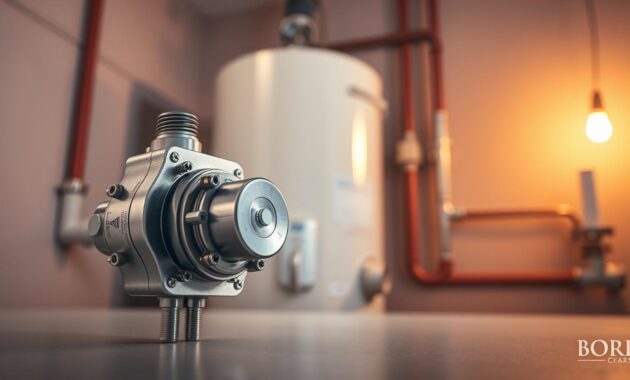
The thermal switch is a silent guardian for water heater safety. It’s also known as a high limit switch. It plays a key role in stopping disasters in your home. Let’s explore what it does and why it’s important.
The thermal switch is a temperature-sensitive circuit breaker. It watches over your water heater’s heating elements. If the temperature gets too high, it acts fast.
Read also: Water Heater Not Heating After Replacing Elements and Thermostat
- Monitors water temperature constantly
- Triggers at preset temperature limits (typically 180-190°F)
- Cuts power to prevent overheating
- Requires manual reset for safety
The high limit switch works simply but is very important. If your water heater gets too hot, the switch stops the heating. You must manually reset it. This makes you check why it tripped.
It’s like a security guard for your water heater. It stops overheating, which could damage equipment or cause fires. The thermal switch protects your home and family by stopping the heating when it’s too hot.
Why Do I Need Thermal Cutoff Switch in Water Heater
Water heaters are complex and need many safety features. The thermal cutoff switch is key to prevent overheating. This helps keep your family and home safe.
Understanding the risks of water heater overheating is important. Gas water heaters are more at risk due to temperature issues. This can happen if vents are blocked or parts don’t work right.
Preventing Dangerous Overheating Situations
Water heaters can be dangerous if not checked regularly. A thermal fuse for water heaters stops many dangers:
- Blocked ventilation causing extreme internal temperatures
- Malfunctioning thermostats that fail to regulate heat
- Sediment buildup creating dangerous hot spots
- Heating elements that don’t automatically shut off
Protecting Your Home from Fire Hazards
The main job of a thermal cutoff switch is to stop water heater fires before they start. Without it, overheated water heaters can start fires. These fires can damage nearby things like cardboard, cleaning supplies, or wood.
House fires from water heater problems are more common than people think. The thermal cutoff switch is your first defense against big damage.
By keeping this safety feature in good shape, you lower the risk of fires. This protects your home’s most important thing – your family’s safety.
The Dangers of Bypassing Your Water Heater Thermal Switch
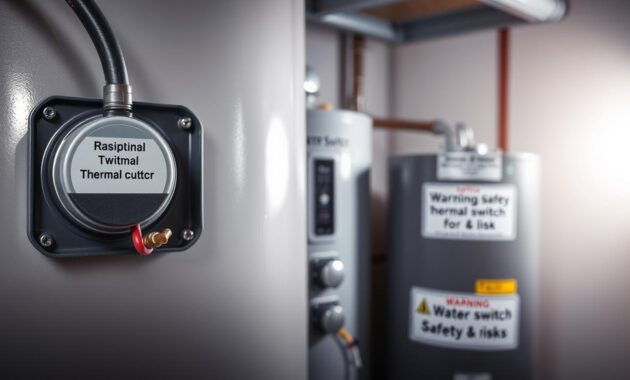
Dealing with a water heater thermal switch problem can be frustrating. No hot water makes you want to bypass the switch. But, this is a very dangerous move that could ruin everything.
Bypassing a water heater thermal switch is risky:
- Potential fire hazard in your home
- Risk of catastrophic water heater failure
- Dangerous carbon monoxide exposure
- Voiding manufacturer warranties
- Potential homeowner’s insurance complications
The thermal switch is key to your water heater’s safety. It stops overheating and prevents deadly situations. If it trips, it means there’s a serious problem that needs a pro’s help.
Some online guides might suggest bypassing for troubleshooting. But, this should only be done with a pro’s guidance. The risks are too high for any temporary fix. A new thermal switch costs less than $20, a small price for safety.
| Bypass Risk | Potential Consequence |
|---|---|
| Electrical Malfunction | Potential Electrical Fire |
| Overheating | Water Heater Explosion |
| Gas Ventilation Issues | Carbon Monoxide Poisoning |
My advice? Always choose safety first. If your water heater’s thermal switch is not working, call a pro right away. Waiting for repair is better than risking your family’s safety.
Common Signs Your Thermal Switch Needs Attention
Your water heater’s thermal cutoff switch is key to keeping your home safe. It stops overheating risks. Spotting early signs can stop bigger problems before they start.
Knowing when your thermal switch is failing can avoid cold showers and damage to your system.
When Your Water Heater Stops Heating
A bad thermal cutoff switch can cause many issues. Here are signs it might be failing:
- No hot water production
- Complete system unresponsiveness
- Sudden interruption of heating cycle
- No sounds or error codes from the system
Pilot Light Problems and What They Mean
Gas water heaters show thermal switch issues through pilot light behavior. Look out for these signs:
| Symptom | Potential Thermal Switch Issue |
|---|---|
| Pilot light goes out immediately | Possible thermal switch malfunction |
| Frequent pilot light extinguishing | Potential thermal cutoff switch water heater problem |
| Difficulty maintaining flame | Likely water heater temperature regulation fault |
If you see these signs, check your thermal switch. A pro can find and fix safety issues fast.
How to Replace a Thermal Switch on Your Water Heater
Replacing a thermal switch on your water heater might seem hard, but I’ll guide you through it. This is a DIY task many homeowners can do safely.
- Screwdriver
- Continuity tester or multimeter
- New thermal switch
- Work gloves
- Safety glasses
When working with gas appliances, safety is key. Follow these steps carefully:
- Turn off the gas supply completely
- Set the thermostat control to “Pilot”
- Close the control valve
- Disconnect electrical connections
Finding the thermal switch is important. It’s usually near the gas control valve, behind a small panel. Take a photo of the wire connections before you remove anything. This helps with reinstallation.
| Step | Action | Time Required |
|---|---|---|
| 1 | Disconnect wires | 5 minutes |
| 2 | Remove old switch | 3-5 minutes |
| 3 | Install new switch | 5-7 minutes |
| 4 | Reconnect wires | 3 minutes |
Test the new thermal switch with a continuity tester before you install it. Make sure all connections are tight and the reset button is easy to reach. Then, slowly turn on the gas supply and check for leaks.
Pro tip: If you smell gas or feel unsure, stop right away. Call a professional technician. Your safety is the most important thing.
Maintenance Tips to Keep Your Thermal Cutoff Switch Working
Keeping your water heater in good shape is more than just fixing problems. It’s about keeping your family safe and making your whirlpool thermal switch water heater last longer. Regular care can prevent unexpected issues and save you money on repairs.
There are a few important steps to take care of your water heater. These steps protect your thermal switch and the whole system. I suggest making a routine to check your equipment regularly.
Creating a Maintenance Schedule
Having a plan for maintenance can help avoid the need for a new thermal switch. Here’s a simple schedule:
- Monthly visual inspections
- Quarterly ventilation checks
- Annual complete system check
Testing Your Thermal Switch
Testing your thermal switch is easy. Use a multimeter for continuity testing. This confirms the switch is working right without stress.
Focus on these areas during maintenance:
- Look for corrosion on electrical connections
- Make sure there’s good ventilation
- Clear debris from the water heater base
- Check that no flammable materials are near
A well-kept water heater can last 8-12 years. By following these tips, you’ll protect your investment. Your home’s hot water system will stay safe and efficient.
When to Call a Professional for Water Heater Issues
As a homeowner, I’ve learned that some water heater problems need a pro’s touch. While fixing things yourself can be tempting, some issues are too complex. This is true for eco switch benefits and keeping the system safe.
I suggest calling a professional in these key situations:
- Repeated thermal switch tripping
- Persistent gas odor (smelling like rotten eggs)
- Unusual noises from the water heater
- Inconsistent water temperature
- Visible corrosion or water leaks
Professional technicians have the skills you need. They know how to fix complex issues that might not be obvious. Their knowledge ensures your water heater works well and safely.
| Professional Service Benefits | DIY Limitations |
|---|---|
| Comprehensive system diagnosis | Limited diagnostic capabilities |
| Warranty protection | Potential warranty voiding |
| Safety code compliance | Risk of improper installation |
| Advanced eco switch benefits | Basic functionality only |
Getting professional help might cost more at first, but it saves money in the long run. It also makes sure your water heater lasts longer. Always choose safety and get a licensed pro when unsure.
Conclusion
Knowing about your water heater’s thermal cutoff switch is key to keeping your home safe. This small part helps stop overheating and fires. These dangers could harm your family and home.
Read also: What Do You Know About AO Smith Water Heater Reset Button?
Keeping your water heater in good shape is easy. Just have a spare thermal switch ready, which costs about $10. Regular checks and quick fixes can make your water heater last longer and work better.
Whether you fix things yourself or call a pro, being informed is important. Your water heater is vital for your home. Pay attention to strange noises, uneven heating, or the thermal switch tripping often. These signs mean you need to act fast.
By looking after your water heater’s safety features, you’re making your home safer and more reliable. Stay vigilant, stay informed, and keep your home running smoothly.