Ever had to deal with cold showers on camping trips? It can really ruin the fun. Imagine shivering after a long hike, just wanting a warm shower. Portable propane water heaters fix this, giving you hot water anywhere, anytime.
In this guide, I’ll cover everything about propane water heaters for camping and RVs. You’ll learn about the best portable models and how to keep them running well. Enjoy hot water on your outdoor adventures with ease.
Why Propane Water Heaters Are Essential for RV and Camping Adventures
Camping and RV adventures need reliable comforts. Propane water heaters bring hot water to the most remote places. They make your wilderness experience more comfortable.
Imagine hot showers after dusty rides or warm face washes on cold mornings. On-demand hot water changes outdoor experiences.
Comfort Beyond Boundaries
Portable hot water solutions offer campers unmatched convenience. They provide key benefits:
- Instant hot water anywhere
- Compact and lightweight design
- Affordable pricing (usually under $200)
- No dependency on electrical hookups
Off-Grid Water Heating Solutions
Off-grid propane water heaters offer total freedom from campground hookups. Unlike electric systems, propane works anywhere with a 20-lb tank. I’ve used them in national forests, BLM land, and remote beach campsites without electricity.
These heaters are very efficient, heating water fast without waste. For families, hot water means easier cleanup and better hygiene. Trust me, once you have on-demand hot water in the backcountry, you’ll never camp without it.
Understanding How Propane Water Heaters Work in Campers
Propane water heaters for camping and RVs are amazing. They give you hot water anywhere you are. Let me explain how they work from my own experience.
The magic starts when cold water goes through the unit. It passes over a heat exchanger being warmed by a propane flame. When you turn on the hot water, water flows through the heater. This flow turns on a pressure-sensitive switch inside.
- Minimum water flow required: 0.26-0.4 gallons per minute (GPM)
- Ignition method: Battery-powered (typically two D-cell batteries)
- Heat transfer: Copper or stainless steel heat exchanger
Modern portable propane water heaters work smart:
- Water flow detected by pressure switch
- Battery-powered ignition creates a spark
- Gas valve opens, propane flows to burner
- Ignition system lights the propane flame
- Heat exchanger reaches high temperatures
The best part is temperature control. Advanced units adjust the flame to keep the water hot.
| Component | Function |
|---|---|
| Pressure Switch | Activates system when water flow detected |
| Heat Exchanger | Transfers thermal energy to water |
| Safety Devices | Prevent overheating and gas-related risks |
Safety is key in these systems. They have many fail-safes to prevent problems:
- Flame failure devices
- Overheat protection
- Low water flow protection
Knowing how they work helps fix issues fast. This includes weak ignition batteries or mineral buildup that stops water flow.
Top Portable Propane Water Heater Picks for Camping and RV Use
Choosing the right portable propane water heater can change your outdoor adventures. I’ve tested many models to find the best for camping and RV trips. Here are three top portable water heaters that provide hot water anywhere you go.
Camplux AY132 Portable Propane Water Heater
The Camplux AY132 is a standout with great specs. It has 1.32 GPM and 34,000 BTU. It has over 2,600 Amazon reviews and a 4.4-star rating. At $159.99, it’s reliable for outdoor lovers.
- Battery-powered ignition for easy start-up
- Compact design perfect for camping
- CSA certified for maximum safety
Gasland BE158 High-Flow Camping Water Heater
The Gasland BE158 raises the bar for portable water heating. It has 1.58 GPM and 41,000 BTU for strong performance. Its digital display lets you control the temperature easily, making it great for campers.
- Strong 41,000 BTU heating capacity
- Digital temperature display
- Comprehensive safety protection systems
Best Budget-Friendly Amazon’s Choice Portable Heater
For those watching their budget, the Amazon’s Choice model is a great deal. It has 1.58 GPM and 41,000 BTU. It also has an integrated carrying handle for easy transport. At $112.99, it’s an affordable option for hot water on the go.
Each portable propane water heater has its own benefits. The Camplux AY132 is reliable, the Gasland BE158 has advanced features, and the Amazon’s Choice model is budget-friendly. They all have battery-powered ignition, safety systems, and CSA certification.
Propane Water Heater Camping: Installation and Setup Guide
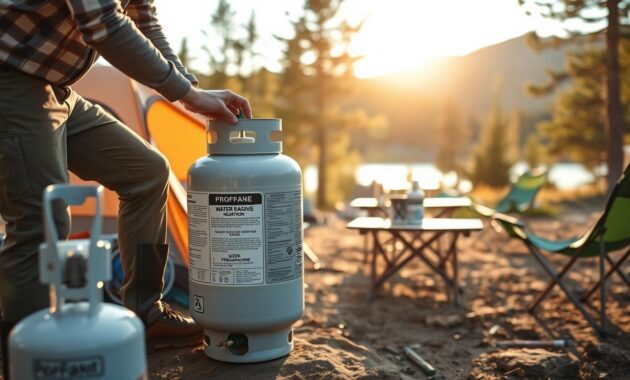
Setting up a propane water heater for camping or RV trips needs careful planning. I’ve learned that the right installation is key for hot water comfort on the go.
Before you mount your portable water heater, think about these important points:
- Adequate ventilation is key – never use propane heaters indoors without proper venting
- Choose a spot that’s protected from rain if you can
- Make sure it’s close to your water source and propane tank
Most heaters come with mounting brackets. I use two screws or bolts to attach the bracket, then hang the heater. Always do safety checks before using it for the first time.
Checking for leaks is a must in your setup. Mix dish soap with water in a spray bottle and spray all propane connections. If you see bubbles, tighten the connection and test again until no bubbles show.
Here are some tips for a smooth installation:
- Purge air from water lines by running cold water for 15-20 seconds
- Keep spare D-cell batteries handy
- In freezing weather, drain the system completely after each use
- Pack the shower head and hoses in a dedicated bag for easy access
Follow these steps, and you’ll be all set for hot water on your camping trips.
Key Features to Consider When Choosing Your Camping Water Heater
Choosing the right portable propane water heater for camping is important. You need to think about several key features. These features affect how well your water heater works outdoors.
Flow Rate and GPM Requirements
The flow rate shows how well your water heater works. Camping water heaters usually have a flow rate of 1.0 to 2.0 GPM. Here’s what each range means:
- 1.0-1.5 GPM: Basic camping shower with minimal pressure
- 1.5-2.0 GPM: Comfortable shower experience close to home standards
- 2.0+ GPM: Luxury performance with multiple fixtures
Read also: Hybrid Water Heater Pros and Cons
BTU Heating Capacity for Different Weather Conditions
The BTU capacity affects how well your water heater heats water. It matters more in different weather:
| BTU Range | Performance Characteristics | Recommended Use |
|---|---|---|
| 30,000-40,000 BTU | Light use, summer camping | Mild weather, minimal heating demands |
| 40,000-60,000 BTU | Regular shower performance | Moderate temperatures, consistent hot water |
| 60,000+ BTU | Cold weather, multiple fixtures | Challenging environments, higher heating requirements |
Safety Features and Certifications
When picking a camping water heater, look for strong safety features. Check for CSA (Canadian Standards Association) certification. It shows the water heater meets safety and performance standards. Important safety features include:
Read also: Gas Hot Water Heater Venting Requirements
- Flame failure device
- Overheat protection
- Low water flow shutoff
- Anti-freeze protection
These features keep your equipment and you safe. They ensure you have hot water for your outdoor adventures without risks.
How to Light and Start a Propane Water Heater in Your Camper
Starting a propane water heater in your camper needs careful steps. My Pre-Start Checklist makes sure everything goes smoothly and safely. Before you light it up, check a few important things to avoid problems.
- Check propane tank fuel level (use a luggage scale to weigh the tank)
- Ensure propane tank valve is fully open
- Confirm water source connection
- Verify pump operation or water pressure
- Inspect ignition batteries
- Examine all propane and water hose connections
It’s key to purge air from the system, which is more important at the start of camping season. Turn on the hot water faucet and let it run for 10-15 seconds. This gets rid of any air in the lines and stops ignition problems.
When you start the ignition, listen for the electronic sparking sound. A good start is when you hear a “whoosh” as the propane lights up in 2-4 seconds. If it doesn’t light, wait 30 seconds before trying again. Start with the lowest temperature and adjust as needed to get your perfect water temperature.
Safety tip: Always check all connections visually and make sure there’s good ventilation when using your propane water heater in a camper or RV.
Propane Consumption: How Much Does a Camper Hot Water Heater Use
It’s important to know how much propane your camper hot water heater uses. This helps you plan your trips and use energy wisely. Different heaters use different amounts of fuel, so it’s good to know how much you’ll need.
Calculating Your Propane Usage on Extended Trips
To figure out how much propane you’ll use, look at the BTU rating. Here’s a simple way to estimate:
- Calculate BTU rating ÷ 91,500 = gallons per hour at full output
- Propane contains about 91,500 BTUs per gallon
- For example, a Camplux AY132 at 34,000 BTU uses 0.37 gallons per hour at max output
- The Gasland BE158 at 41,000 BTU uses 0.45 gallons per hour
Tips for Maximizing Propane Efficiency
Real-world propane use can be different from what you calculate. Your heater doesn’t run all the time, and it’s not always at full power. Here are some tips to save propane:
- Turn off water while soaping during showers
- Use moderate temperature settings
- Limit hot water use to essential activities
- Consider a low BTU rating heater for shorter trips
For a week-long trip with two people showering daily and washing dishes, you might use about 0.42 gallons of propane. A standard 20-lb propane tank holds about 4.7 gallons. So, you’ll likely use less than 9% of your tank for hot water.
Maintenance and Cleaning Your Propane Camping Water Heater
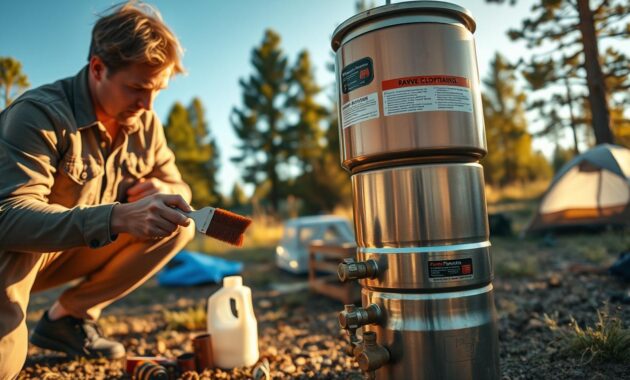
Keeping your propane water heater in top shape is key. You need to care for it after each trip and during seasonal changes. This ensures it lasts long and works well for your camping and RV trips.
After a camping trip, I clean my water heater thoroughly. This cleaning routine is important to avoid damage:
- Flush the system with fresh water to remove debris and sediment
- Check for any mineral buildup, specially after using hard water sources
- Completely drain the water heater to prevent freezing
In spring and fall, I do more than usual maintenance. I suggest a detailed inspection that includes:
- Carefully examining all connections and seals
- Checking for any signs of wear or possible leaks
- Cleaning the exterior and interior parts
For annual deep maintenance, I follow my water heater’s manual closely. This usually means:
- Flushing with a vinegar solution to remove mineral deposits
- Inspecting and possibly replacing sacrificial anodes
- Checking all gas connections and safety features
Pro tip: Always drain your water heater completely before storing it. Any leftover water can cause serious damage in cold weather. This might crack the heat exchanger and cost a lot to fix.
Tankless vs Traditional: Choosing the Right System for Your RV
Choosing between a traditional tank system and a tankless propane water heater for camping is a big decision. I’ve learned a lot from using both. Each has its own benefits, depending on your camping needs.
There are several important factors to consider. Tankless propane water heaters are great for many campers because they:
- Provide endless hot water
- Save space with their compact design
- Use less energy
- Are lighter, making them easier to move around
Benefits of Tankless Propane Water Heaters for Camping
Tankless systems are perfect when you need lots of hot water and don’t have much space. My portable tankless unit gives me hot water instantly. This is a huge advantage for long camping trips, allowing for longer showers and hot water whenever you need it.
Read also: How to Descale Tankless Water Heater
When Traditional Tank Systems Make More Sense
Traditional tank systems are also good for certain situations. They’re best for:
- Short camping trips
- Small groups that use less hot water
- Those watching their budget
- Places with steady temperatures
The choice between tankless and traditional depends on your camping style, budget, and hot water needs. Think about the pros and cons to decide what’s best for your RV adventures.
Conclusion
Choosing the right portable propane water heater can change your camping and RV trips. I’ve looked at top picks like Camplux and Gasland. It’s key to match the tech specs to your needs.
Look for systems with 1.3-1.6 GPM flow rates and 34,000-45,000 BTU capacity. This ensures hot water anywhere outdoors.
Safety and ease of use should guide your choice. I suggest picking water heaters with strong safety features and certifications. The choice between tankless and traditional tanks depends on your camping style and water use.
Brands like Camplux offer easy-to-use solutions. They make setting up and using the water heater simple.
Knowing how much propane you’ll use and how to maintain your heater is important. Hot water in the wilderness is a comfort that modern heaters provide. It’s not just for luxury; it’s for enjoying the outdoors fully.
My last tip? Don’t worry too much about choosing. Modern portable propane water heaters are easy to use. Pick a trusted brand, know what you need, and enjoy hot showers under the stars. Your outdoor adventures are just beginning!